
DJI Mini 4 Pro vs DJI Neo (2026) – Which Ultra-Lightweight Drone Wins?
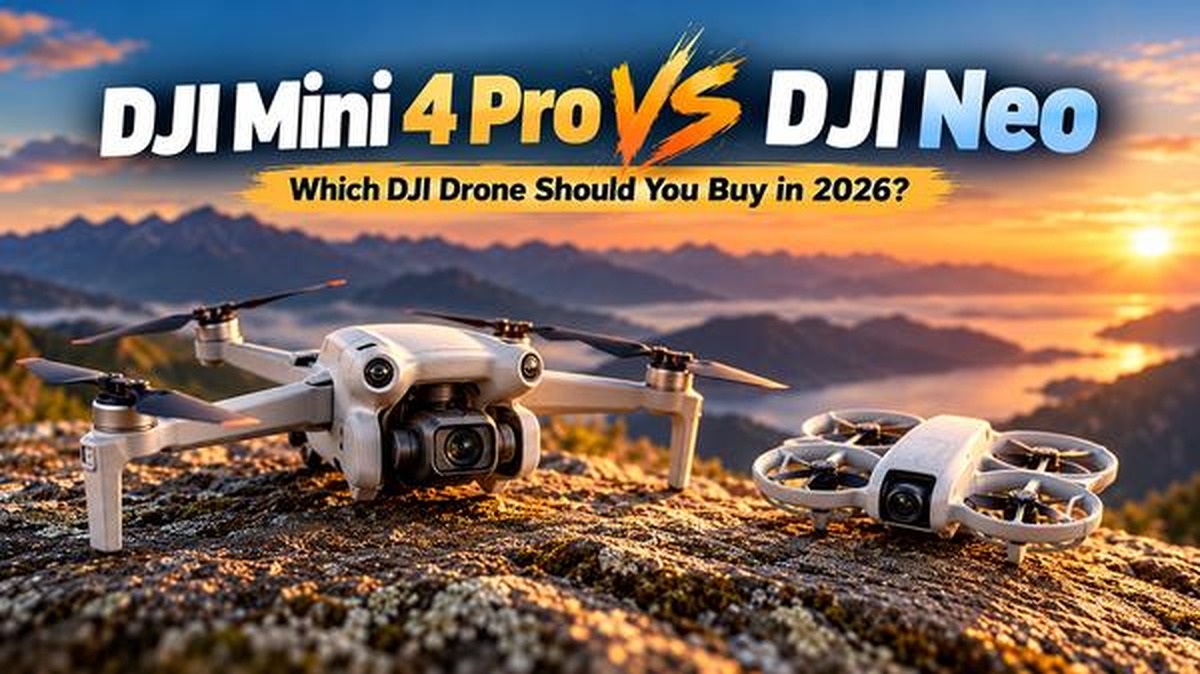
Which tiny DJI drone should you buy: the camera powerhouse or the palm-launch pocket flyer? If you want polished aerial footage and obstacle sensing, choose the DJI Mini 4 Pro. If you want a featherweight drone that is ready for spontaneous clips, choose the DJI Neo. Same “small drone” aisle; wildly different missions. If Neo’s quick-launch approach appeals but you want a gimbal camera, see our DJI Flip vs DJI Neo comparison.
Fast verdict: the camera battle? The Mini 4 Pro is not even close if image control matters. Neo wins the take-it-anywhere simplicity round. Prices move, so check Amazon for today’s offer.
DJI Mini 4 Pro · DJI Neo
The quick verdict
| DJI Mini 4 Pro | DJI Neo | |
|---|---|---|
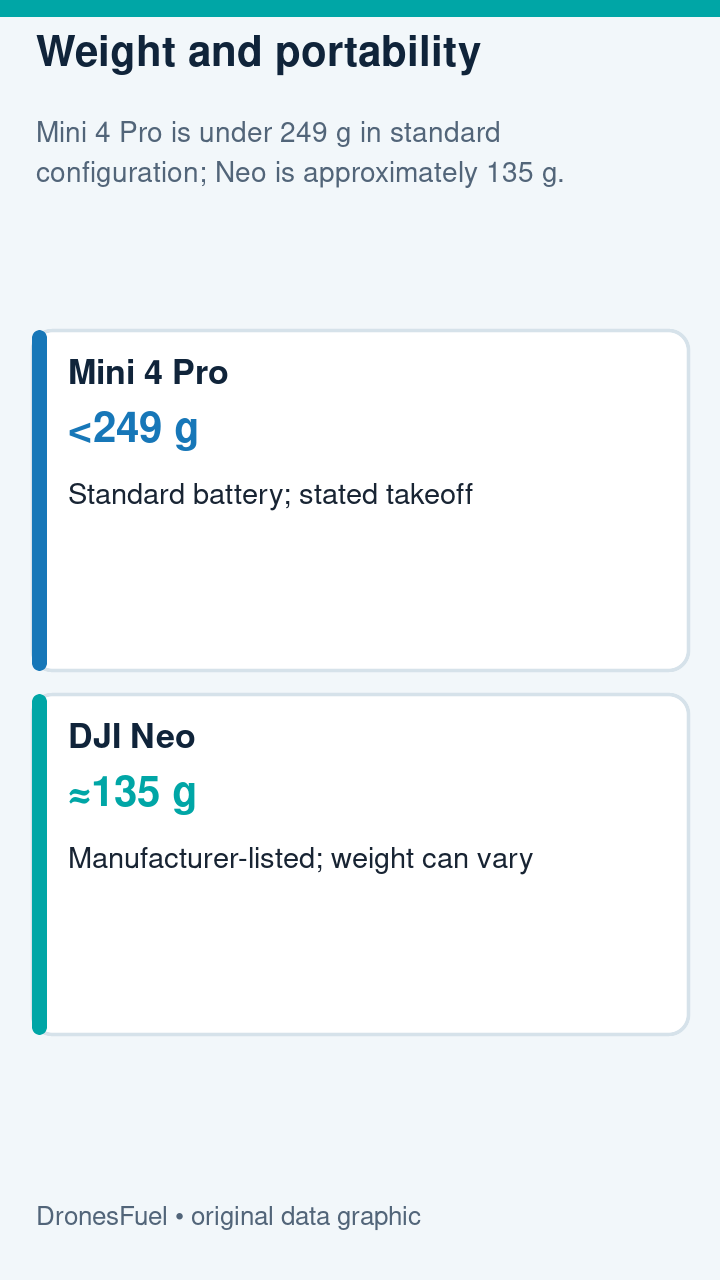
| Takeoff weight | Under 249 g (configuration dependent) | About 135 g |
| Camera sensor | 1/1.3-inch CMOS | 1/2-inch |
| Gimbal | Three-axis | One-axis plus electronic stabilization |
| Video headline | 4K up to 60 fps | 4K up to 30 fps |
| Listed max flight time | 34 minutes with standard battery | 18 minutes |
Think about the shots you want: a slow reveal over a landscape, a higher angle on a campsite, or a moving shot that keeps a subject in frame. Mini 4 Pro gives you a more flexible camera base for those plans. Neo is happiest when you want a simple overhead moment or a quick supported tracking clip without building a whole filming routine.
Mini 4 Pro also suits a planned shoot better. You can decide on an angle, move slowly into position and use the gimbal to keep the image composed as the aircraft moves. Neo’s convenience is less about camera adjustment and more about making a short flight easy to start. Those strengths complement different habits rather than competing directly.
Consider three common outings. On a hike, the Neo is the aircraft you are more likely to carry because it is light and fast to launch. On a vacation where you want a few polished establishing shots, the Mini 4 Pro’s gimbal, larger sensor and control options make it the better camera tool. When you are learning around a clear field, either can work, but Mini 4 Pro gives you a controller-centered routine and more sensing coverage to learn with.
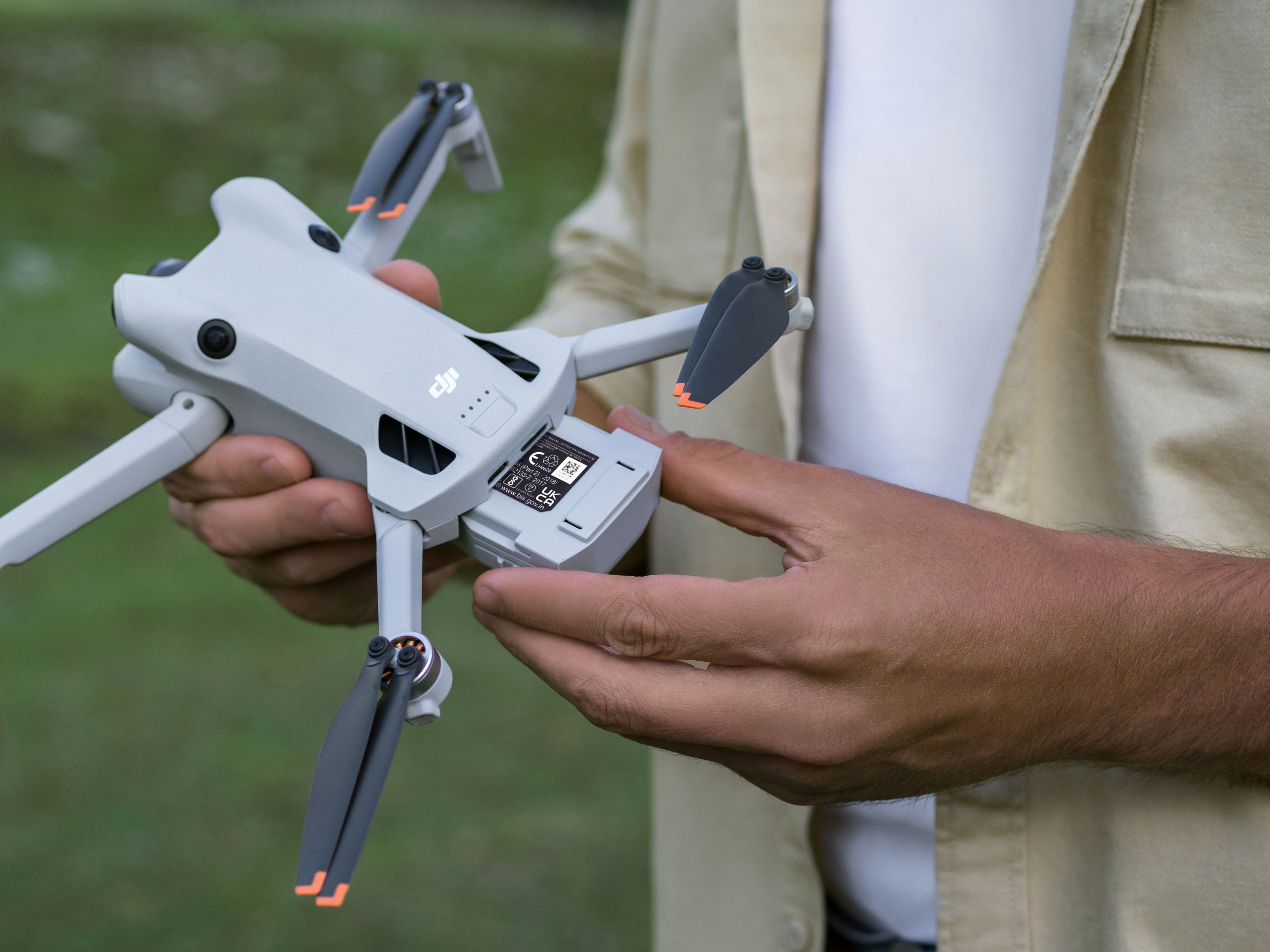
The Mini 4 Pro is a camera drone that happens to be compact. Neo is a compact drone built around quick, approachable flying. That one sentence does most of the comparison work.
Size and portability: lighter is not the whole story
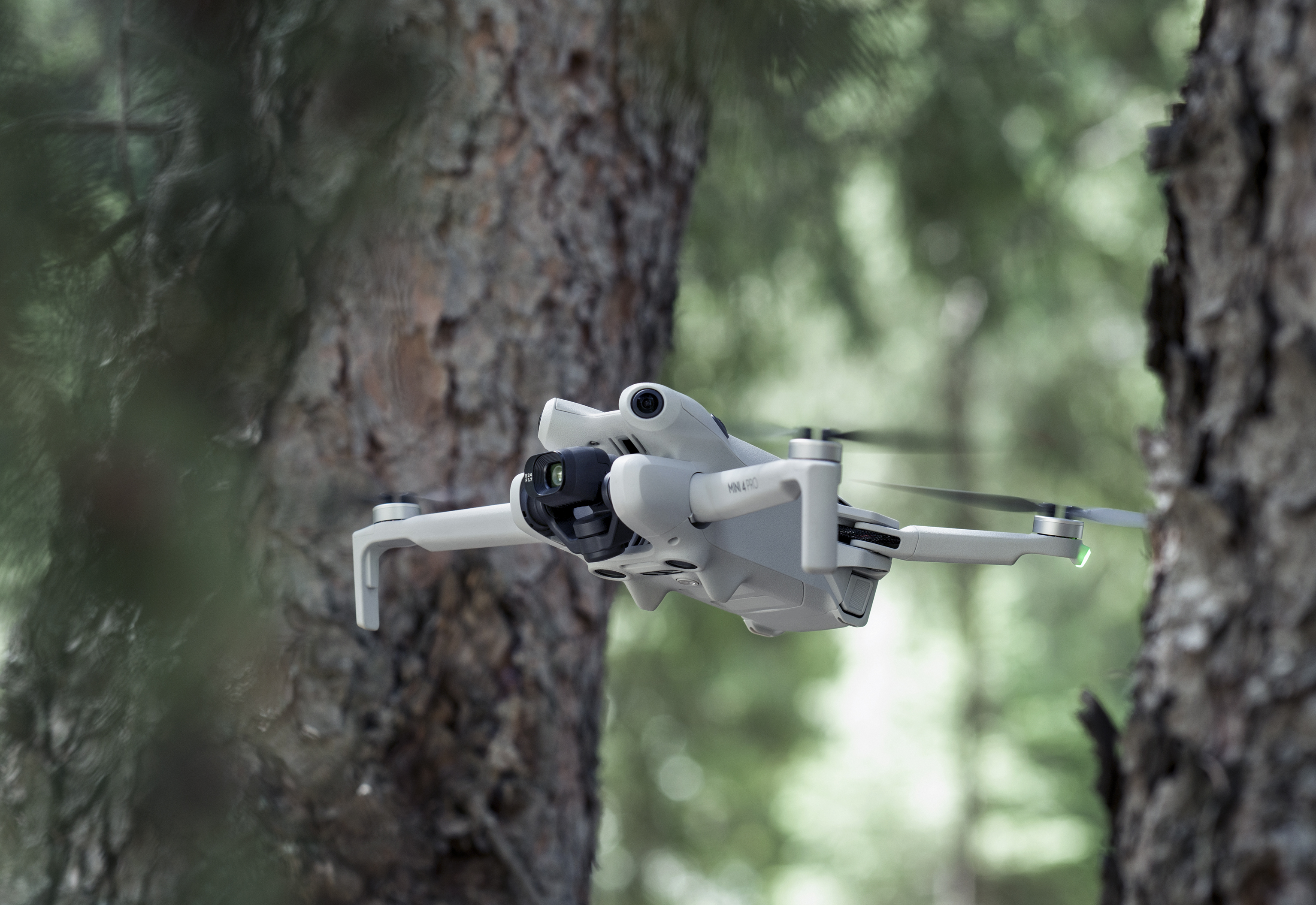
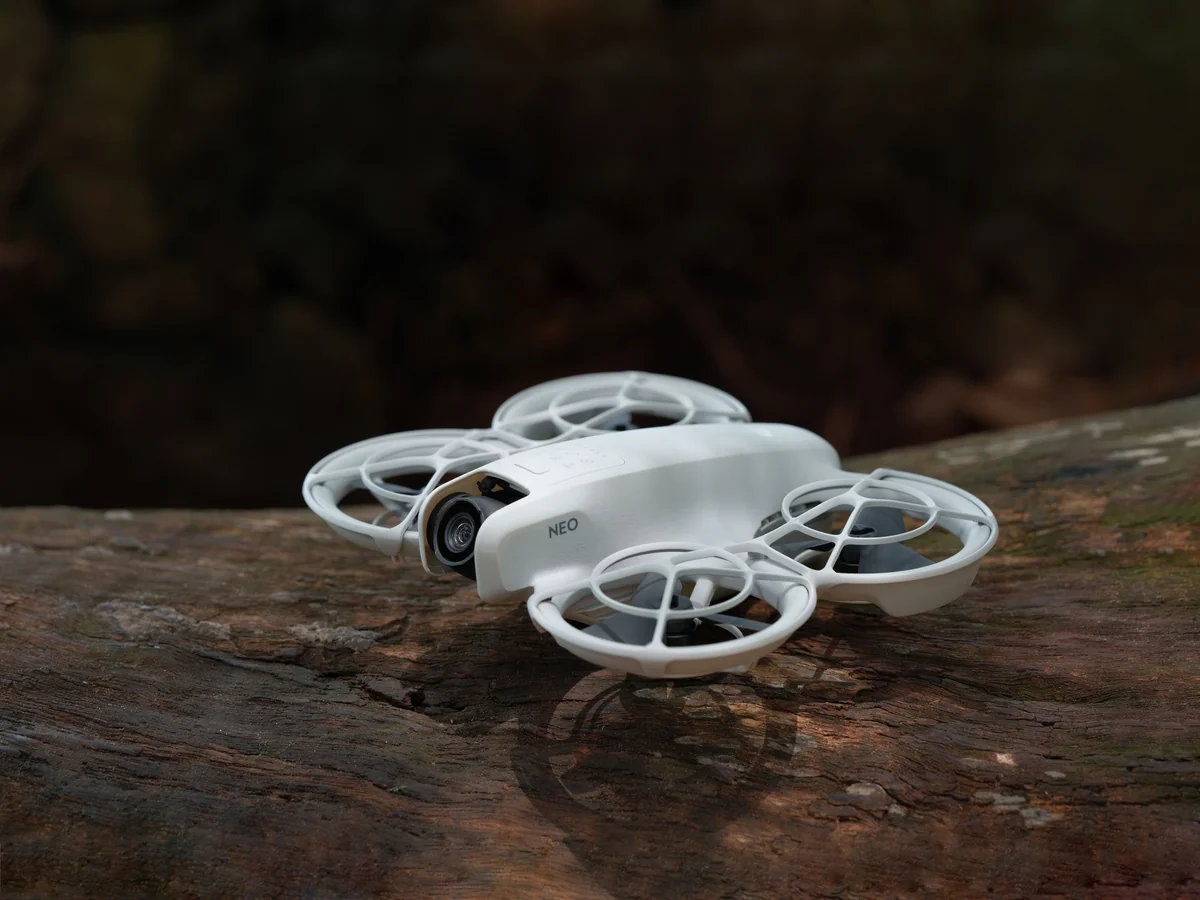
Neo’s approximately 135 g weight and full-coverage propeller guards make it the lighter, less intimidating package. You can launch it from your palm using its supported workflow, then fold it into the day without planning a whole camera outing. The Mini 4 Pro is still impressively small, but it asks you to think like a pilot with a dedicated camera tool.
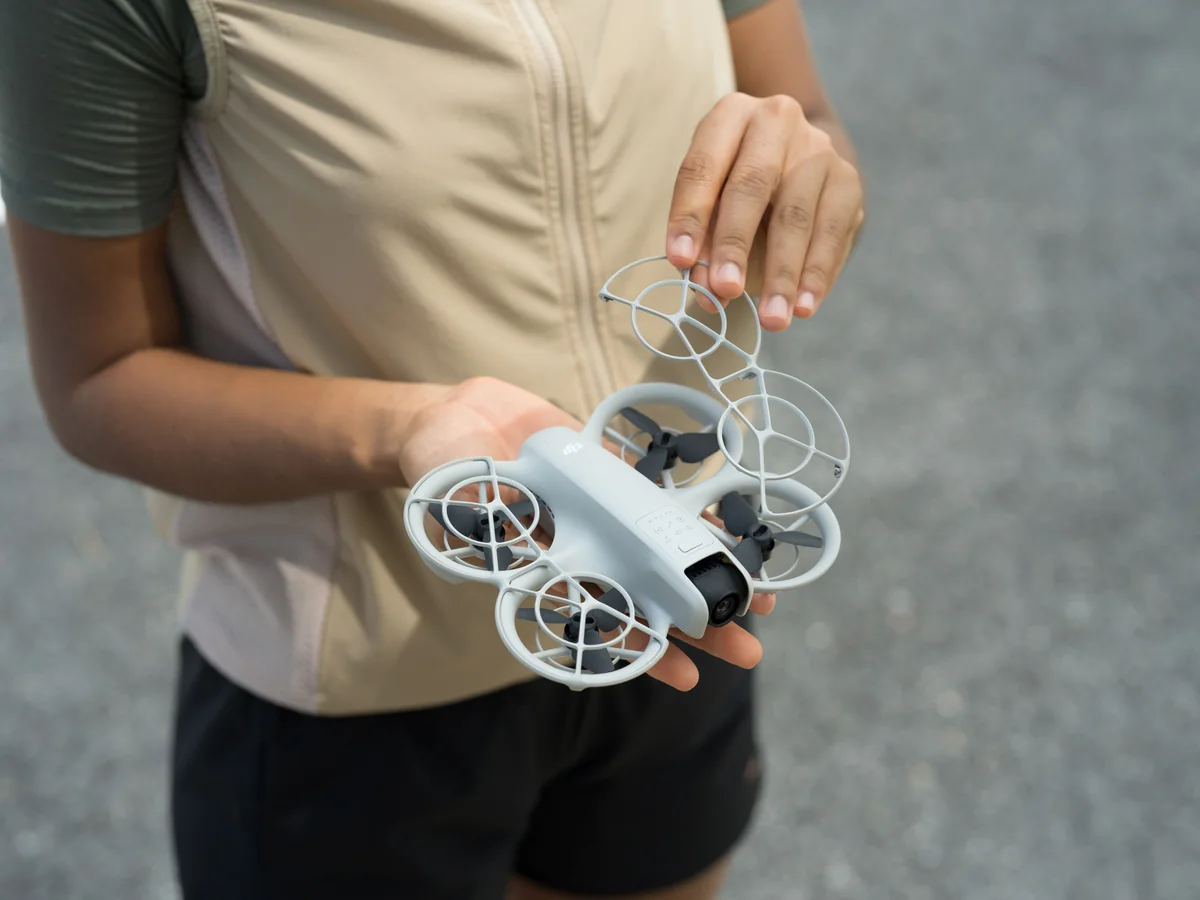
A smaller aircraft is also easier to bring along, but size does not tell you whether you will enjoy using it. Ask how often you want to carry a controller, whether you like a hand launch, and whether a more traditional aircraft shape helps you feel in command. The most capable drone is the one that suits your plans and gets used.
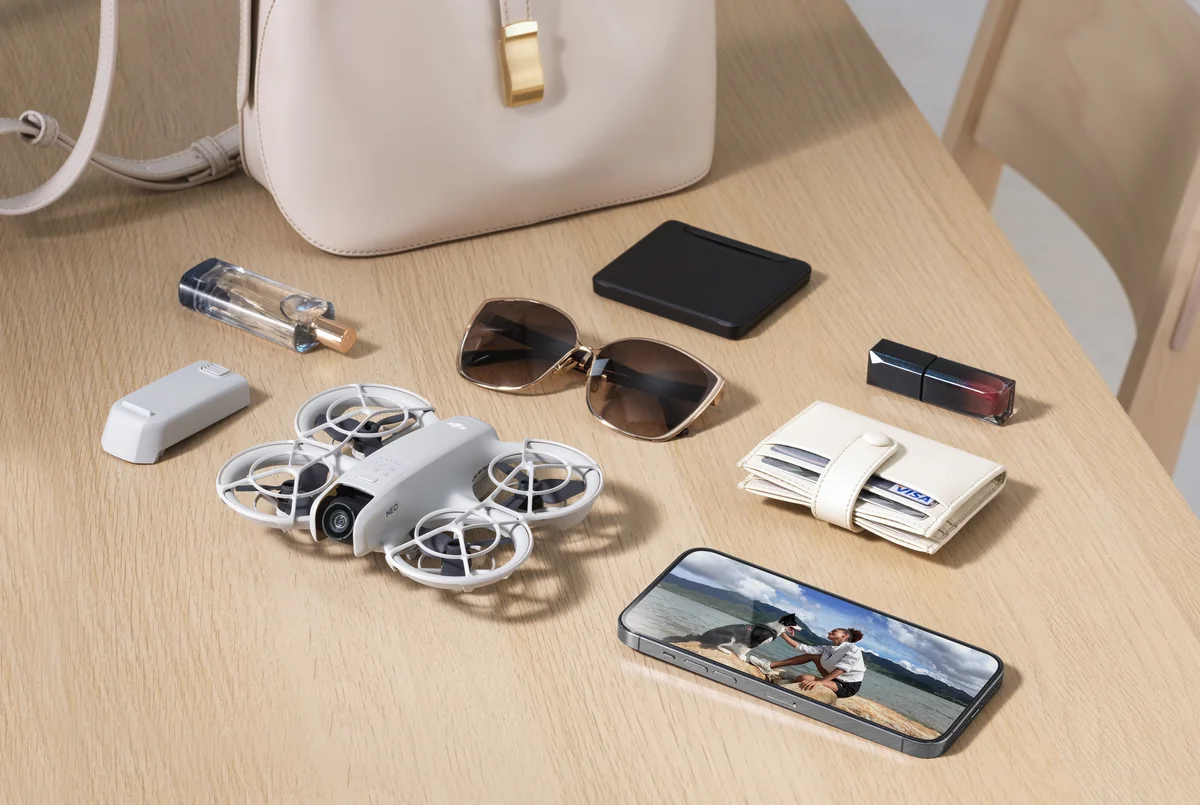
“Under 249 g” is useful context, not a universal permission slip. Batteries, accessories, region and rules matter. Check the configuration you will actually fly and the current requirements where you live.
Camera showdown: the Mini 4 Pro takes this round
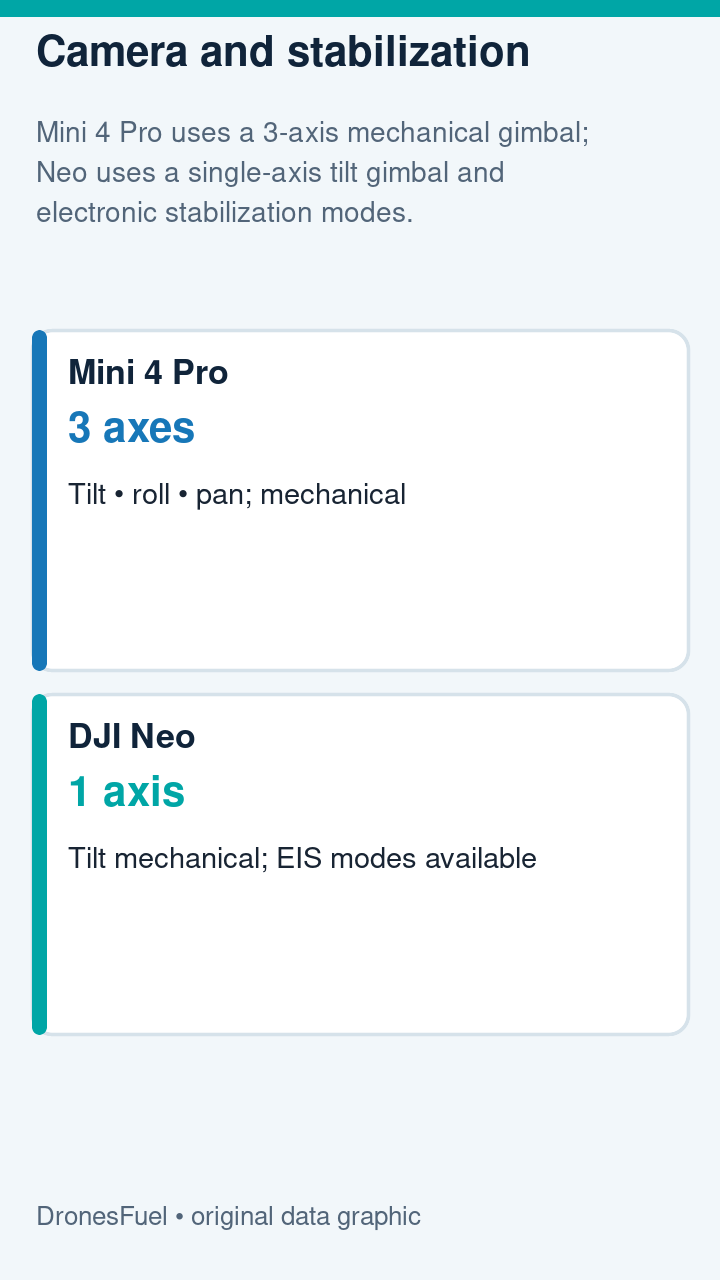
Mini 4 Pro’s three-axis gimbal is useful whenever the aircraft needs to move while the camera stays composed. A gentle forward pass, a turn over a coastline or a climb above a trail all look more deliberate when the camera is stabilized mechanically. It does not make the drone fly the shot for you, but it gives your footage a steadier base.
The Mini 4 Pro has a larger 1/1.3-inch CMOS sensor, a three-axis mechanical gimbal and 4K video up to 60 fps. It gives you more camera control and a steadier platform for deliberate travel shots, landscapes and moving subjects.
Neo uses a 1/2-inch sensor, records up to 4K/30 and combines a one-axis gimbal with electronic stabilization. That is a clever setup for a drone this small. It simply does not give you the same camera range or gimbal movement as the Mini 4 Pro.
Another way to frame it: Mini 4 Pro gives you more room to compose a shot and recover when your movement is not perfectly smooth. Neo gives you a fast route from “that would make a fun clip” to takeoff. If camera settings and deliberate framing are part of the fun, the extra Mini capability will matter. If they sound like homework, Neo has the friendlier personality.
Here is the point where system cost matters. Mini 4 Pro can ask for more money up front, but its camera and gimbal can reduce how quickly you outgrow the kit. Neo is less of a commitment and easier to carry; if its camera ceiling suits you, there is no reason to pay for capabilities you will not use.
There is a price to that capability: the Mini 4 Pro system can cost considerably more, especially with a display controller and extra batteries. If you are not going to use the camera range, obstacle sensing or controller-based framing, Neo may give you more enjoyment per dollar. For lower-priced alternatives, see our camera drone guide under $200. A good comparison weighs the features you will use, rather than counting them all equally.
Want a drone to make filming the main event? Mini 4 Pro wins. Want an easy flying camera to capture quick clips? Neo’s camera is part of a much simpler package.
DJI Mini 4 Pro
Obstacle sensing: the coverage gap matters
In a shop aisle, the Mini 4 Pro can look like the obvious choice because it has more capability everywhere. But buying headroom only matters if you will use it. Neo may be the better value for someone who wants short clips and an easy launch, while Mini 4 Pro makes sense for a photographer who plans to use the camera controls and sensing features.
For travel, the Mini 4 Pro is the option for someone who already carries a controller and wants to make the drone part of the photography kit. Neo is easier to slip into a casual day out. Think of Mini as the camera you plan to use and Neo as the camera you might use because it is already with you.
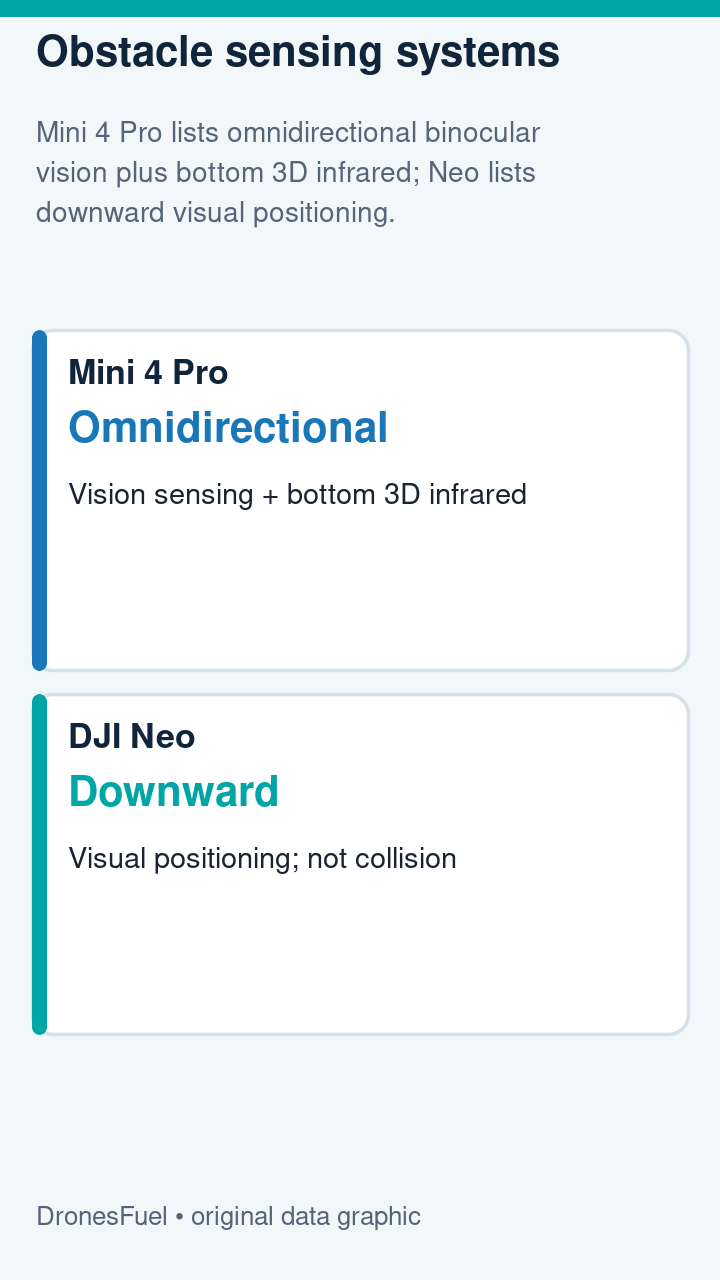
Sensor coverage is particularly relevant if you tend to move the aircraft while looking at the controller screen. A wider sensing system can help warn of some obstacles within supported conditions. Neo’s lack of broad sensing means you should give it extra room, choose a clear flight path and avoid squeezing through gaps.
Mini 4 Pro’s omnidirectional sensing system can detect obstacles in multiple directions under supported conditions. It adds useful awareness when you are framing a shot or moving through a more complex environment, though it cannot see every obstacle in every scene.
There is no prize for buying the more capable drone if its setup makes you leave it at home. If you know you do not want to carry a controller, Neo’s lower friction may be worth more to you than the Mini’s camera advantages. If you enjoy practicing stick control and building a shot, Mini’s extra setup is part of the hobby.
Neo is built for simpler flight. It has downward sensing for positioning, not the Mini’s all-direction obstacle sensing system. Its propeller guards help protect the propellers; they do not turn the aircraft into a collision-proof bumper car.
For a newer pilot, more sensing coverage can add useful awareness, especially when framing a shot. It is not a substitute for learning the controls or checking the route. Experienced pilots may value the sensor system less if they fly in open spaces and already plan each movement carefully.
Winner: Mini 4 Pro. If sensing coverage is a key part of your comfort level, the difference is substantial. Still fly with a clear route and your eyes on the drone.
Controls and flight time: choose your kind of flying
If your experience is mostly phone photography, Neo’s app-led approach may feel familiar. A dedicated controller asks you to learn stick movement and keep your eyes on the aircraft, but it can also make careful positioning easier. Neither workflow is automatically better. Think about whether you want controls to disappear into the background or you want to learn the mechanics of flying.
Neo supports palm takeoff and app-based control, and you can pair it with compatible controllers for a more conventional setup. The experience is designed to be quick and simple. Mini 4 Pro uses a dedicated controller workflow, with bundle options that may include the DJI RC 2 screen controller or another controller. Check the exact package; accessories change the overall price.
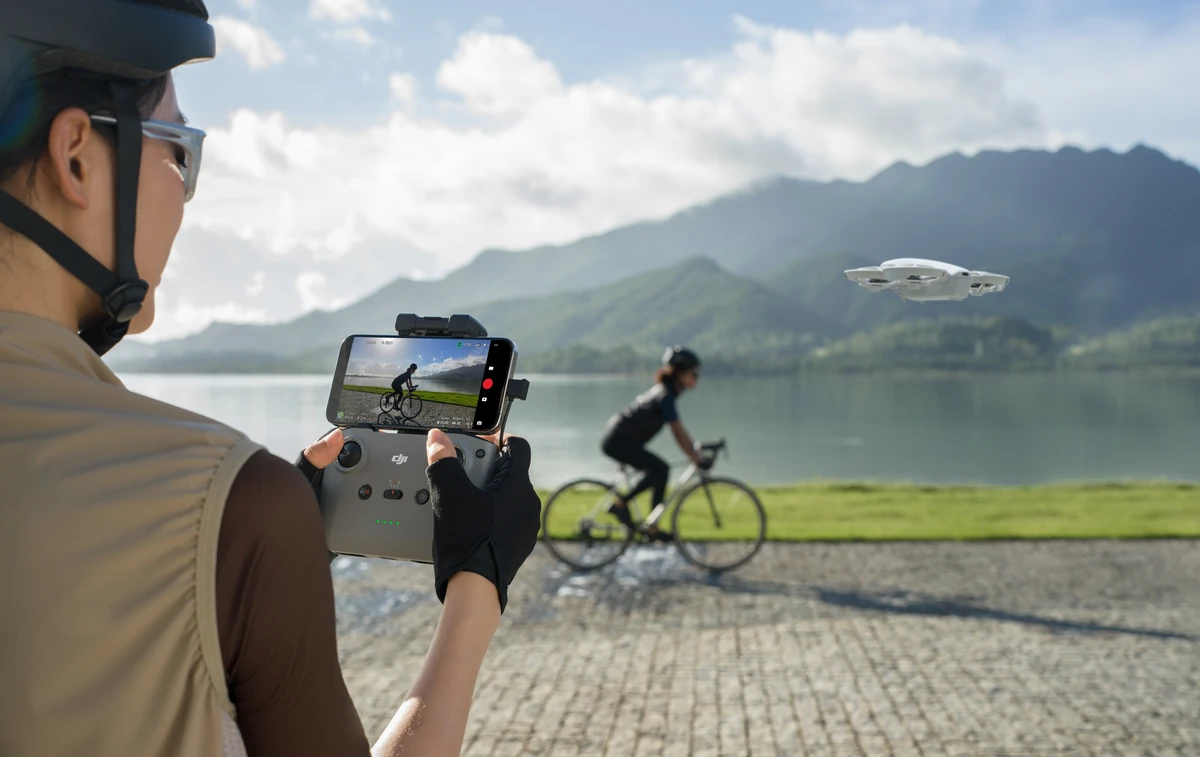
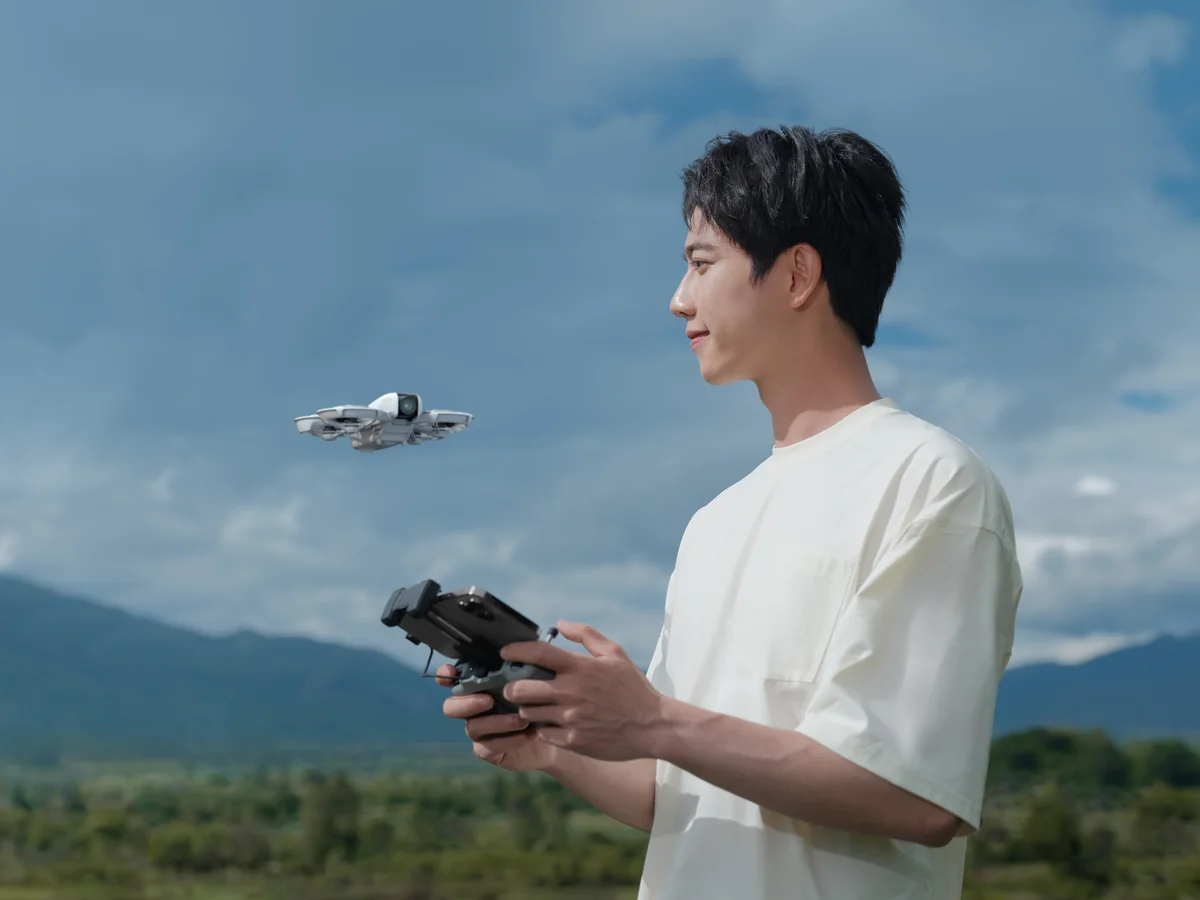
A quieter advantage for the Mini 4 Pro is how its controller-based routine can help you plan a shot: set your position, make a slow movement and keep camera adjustments available. That is a different kind of convenience than Neo palm launch. It takes more setup, but can feel more natural for someone who already likes photography.
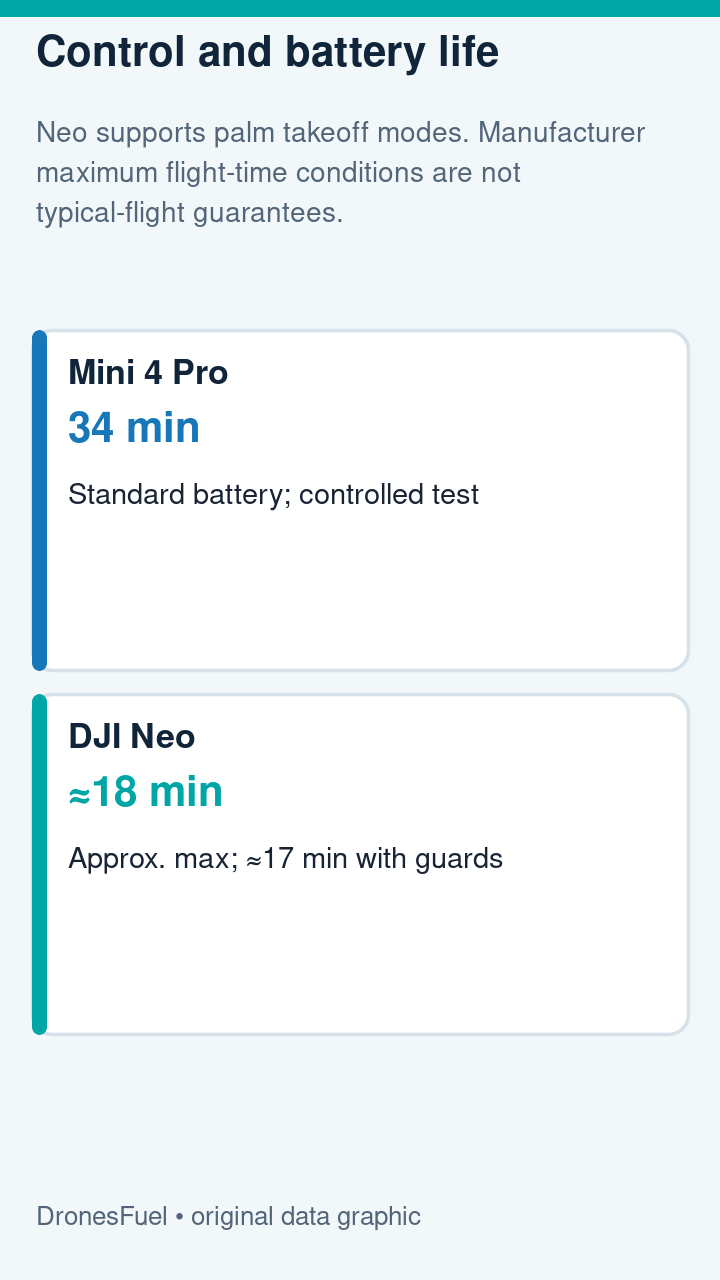
DJI lists up to 34 minutes for Mini 4 Pro with the standard battery and up to 18 minutes for Neo. Those are maximum figures from manufacturer conditions, not a promise for every flight. Wind, temperature, battery age and your flying style all take a bite.
Buy the Mini 4 Pro if…
- You care about camera movement, smoother footage and 4K/60 capture.
- You want broader obstacle sensing for supported flight conditions.
- You are happy carrying a controller and building a more complete camera kit.
The cost is higher and the flying routine is more involved. In return, you get a much more capable camera platform. DJI Mini 4 Pro
Buy the Neo if…
- You want to launch quickly and keep setup friction low.
- You value low weight and full-coverage propeller guards.
- Your clips are casual and convenience matters more than advanced gimbal control.

Neo’s limits are real: shorter listed flight time, simpler camera stabilization and less sensing. But the whole point is that you might actually bring it along. DJI Neo
Quick questions
Which one has the better camera?
Mini 4 Pro, thanks to its larger sensor, three-axis gimbal and 4K/60 video option. Neo is designed for simplicity and portability.
Can Neo avoid obstacles like Mini 4 Pro?
No. Neo has downward sensing; Mini 4 Pro provides broader omnidirectional sensing in supported conditions.
Are the flight-time numbers guaranteed?
No. They are manufacturer maximums, and real flights vary with conditions and use.
Which one should a beginner choose?
Try this simple test: imagine you have ten minutes before sunset. Would you rather open the case, connect a controller and compose a shot, or launch from your palm and capture one quick moment? That answer points toward your likely favorite. If you have a camera project in mind, Mini’s extra controls are worth the steps. If you just want to fly, Neo keeps the fun close.
Choose Neo for the easiest launch routine. Choose Mini 4 Pro if you want to learn with a controller and camera features you can grow into.
Is Mini 4 Pro a good travel drone?
Yes, if you want a capable camera system in a compact aircraft and do not mind bringing the controller. Neo is the better fit when low weight and quick setup matter more than camera flexibility.